Head and Neck Imaging
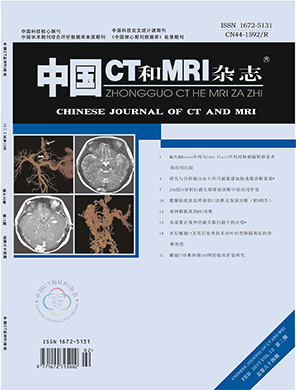
The Contrast Study of CT and MRI in the Diagnosis of Spinal Tuberculosis
Author:WANG Li-li1,2, SHENG Hai-ping3 , LEI Jun-qiang1,2, GUO Shun-lin1,2
affiliation: 1 The First Clinical Medical College, Lanzhou University, Lanzhou 730000, Gansu; 2 Radiology Department, the First Hospital of Lanzhou University, Lanzhou 730000, Gansu; 3 Ultrasound Department, Traditional Chinese Medicine Hospital of Jinta County, J
PDFAbstract
Objective To evaluate the clinical value of computed tomography (CT), magnetic resonance imaging (MRI) in the diagnosis of spinal tuberculosis. Methods Thirty cases of spinal tuberculosis that were confirmed by histopathology in surgery and follow-up. Twenty patients were examined with both CT and MRI, only one by CT scan, 9 cases by MRI. The information about CT, MRI and clinical data were collected. Results MRI and CT showed the spinal cord compression prospectively were 41.4% (12/29) and 13.6% (3/22), there was statistical difference (P=0.031). For patients with both MRI and CT examination, the spinal stenosis was found in 9 cases by MRI, 6 cases by CT; the spinal cord compression was found in 7 cases by MRI, 2 cases by CT; the affected intervertebral disc was found in 16 cases by MRI, 13 cases by CT. The paraspinal soft tissue abscesses was found in 16 cases by MRI, 13 cases by CT. Conclusion Spinal tuberculosis bone destruction, accessories invasion, disc involvement, paraspinal soft tissue abscess, and spinal stenosis could be better showed by CT. However, MRI has obvious advantages for detecting spinal cord compression. Combination of both MRI and CT could contribute to the diagnosis of spinal tuberculosis.
【Keyword】 Spinal Tuberculosis; Computed Tomography; Magnetic Resonance Imaging
【Chart number】R529.23;R445.2;R445.3
【Document Identification Number】A
【DOI】 10.3969/j.issn.1672-5131.2015.02.23
Chinese journal of CT and MRI
th13Volume, th 2 Issue
2015Year02Month
Related articles

Editor email:(1)中国CT和MRI杂志:ctmri@vip.163.com;(2)罕少疾病杂志:hs1999@vip.163.com;(3)官网系统自动发论文录取通知书(注意!请勿回复或发送邮件到此邮箱):send@diagnoschina.com
Contact number:0755-83695203
Our address:

 English
 简体中文
简体中文 logged in
 Wechat
 TouTiao